Why Corporate Learning Needs Rethink Learning
07-07-26 | 5 minutes reading time
07-07-26 | 5 minutes reading time

Friedl Wynants
Founder & Managing Director
Corporate learning is currently undergoing a fundamental transformation. We see this not only in our projects, but in nearly every conversation we have with leaders in Learning & Development. The questions being asked are surprisingly similar: How can we successfully transfer knowledge when it becomes outdated at an ever-faster rate? How can we support people in a work environment that is constantly changing—sometimes at a dizzying pace? And what supportive role can generative AI play in this?
Organizations today face a twofold challenge:
L&D therefore faces a task that goes far beyond developing new training programs. The real challenge, then, is not to offer “more learning,” but to design learning in a way that makes an impact where people need support.
This trend is not new—we’ve been observing it for many years. However, with the emergence of generative AI, it has taken on a new dynamic. Not because artificial intelligence suddenly renders traditional learning formats obsolete, but because it opens up possibilities for thinking about learning in a fundamentally different way. Based on these observations and our conversations with our clients, a conviction has gradually crystallized for us that describes our vision for the future of corporate learning:
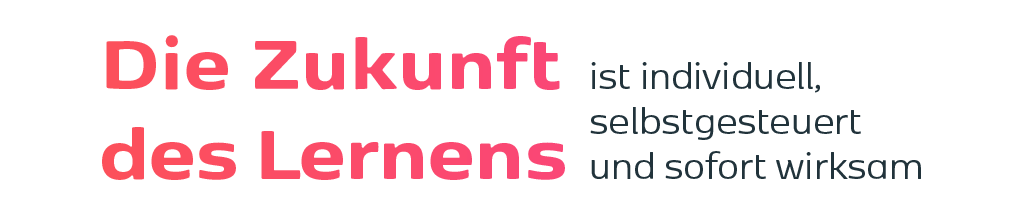
This statement describes our vision, which guides our work and which we are convinced will shape corporate learning in the years to come. The exciting question now is what implications this has for L&D. Does this vision mean that traditional learning formats will become obsolete in the future? We don’t believe that to be the case.
When discussing the future of learning, it’s easy to fall into the trap of pitting the new against the tried-and-true: e-learning versus generative AI, in-person training versus learning assistants, pre-learning versus learning on demand.
In our view, this discussion misses the point. Didactically sound learning formats will continue to play an important role in the future. They excel at laying the groundwork, explaining concepts, fostering personal interaction, and supporting change processes. There are many situations in which people consciously need time to learn—separate from their immediate work context. Even generative AI won’t change that.
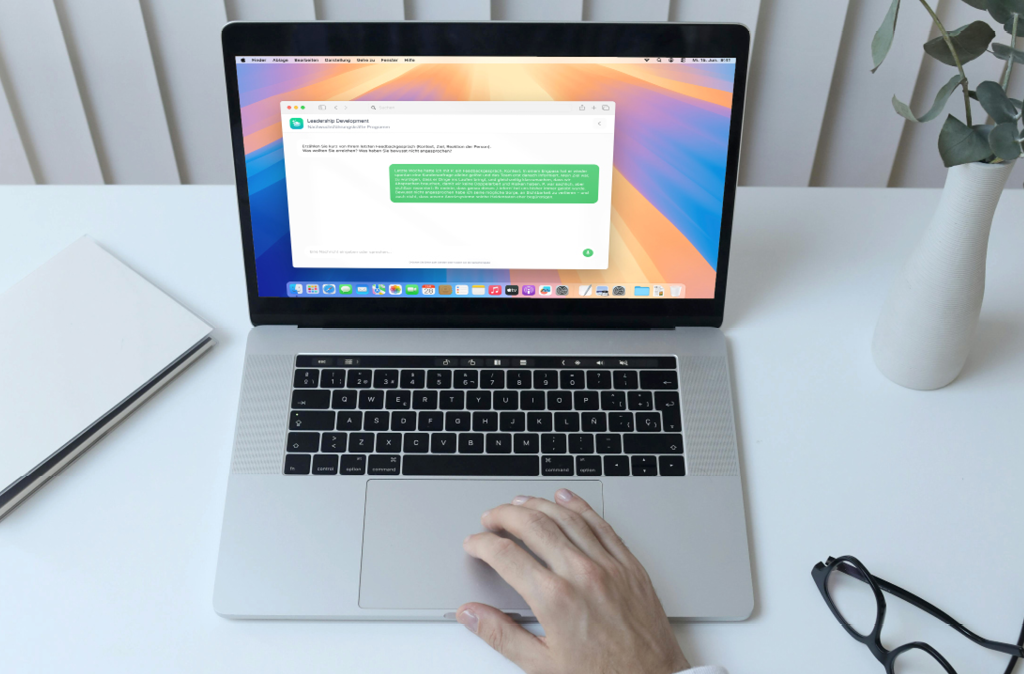
At the same time, we see the limitations of traditional learning programs every day. Learning often takes place long before the knowledge is actually applied. Employees complete a training course and are expected to recall what they’ve learned weeks or months later—and it is precisely during this time that the transfer gap arises, a challenge that has preoccupied learning professionals for decades.
The key change, therefore, is not about replacing existing formats. It’s about complementing them in a meaningful way. For the first time, generative AI makes it possible to bring learning much closer to the moment when knowledge is actually needed.
For a long time, learning was inevitably standardized. e-learning was aimed at a broad audience, not at individuals. Everyone received the same content, regardless of their prior knowledge, experience, or specific questions.
This was never a didactic ideal, but rather the result of the (limited) options available. Generative AI is fundamentally changing this situation. For the first time, it’s becoming possible to tailor learning opportunities much more closely to individual learners without significant effort. Not everyone needs the same information at the same time. Some need guidance, others want to deepen their knowledge, and still others are simply looking for a quick answer to a specific question. The more personalized learning becomes, the more relevant it also becomes. The vision of personalized one-on-one guidance—which has been a focus for learning professionals for many years—is thus moving a big step closer to reality.
The role of learners is also changing. To this day, many learning programs follow a traditional push model. Organizations decide what content is taught, when learning takes place, and when training must be completed. For mandatory training or regulatory topics, this approach will remain indispensable in the future.
But not every learning need can be planned. Many questions only arise while on the job. How should I proceed in my next meeting with a client? Which policy applies in this special case? How do I solve this problem? Until now, such moments often prompted a search for documents or led people to turn to colleagues for help. A 2024 McKinsey study found that the average employee in a German office spends 8–12 hours per week searching for information—that is, up to a quarter of their working time.
Generative AI opens up a new possibility here, allowing learners to get support exactly when they need it—on their own terms, based on the situation, and tailored to their actual needs.
Perhaps this is where the biggest change is taking place. Traditionally, learning is often separated from “productive” work. First, knowledge is imparted; then, it is supposed to be put into practice. There is often a significant time gap between these two steps.
Generative AI offers the possibility of partially bridging this gap. Knowledge can be available right where it’s needed—during a task, a decision, or a conversation.
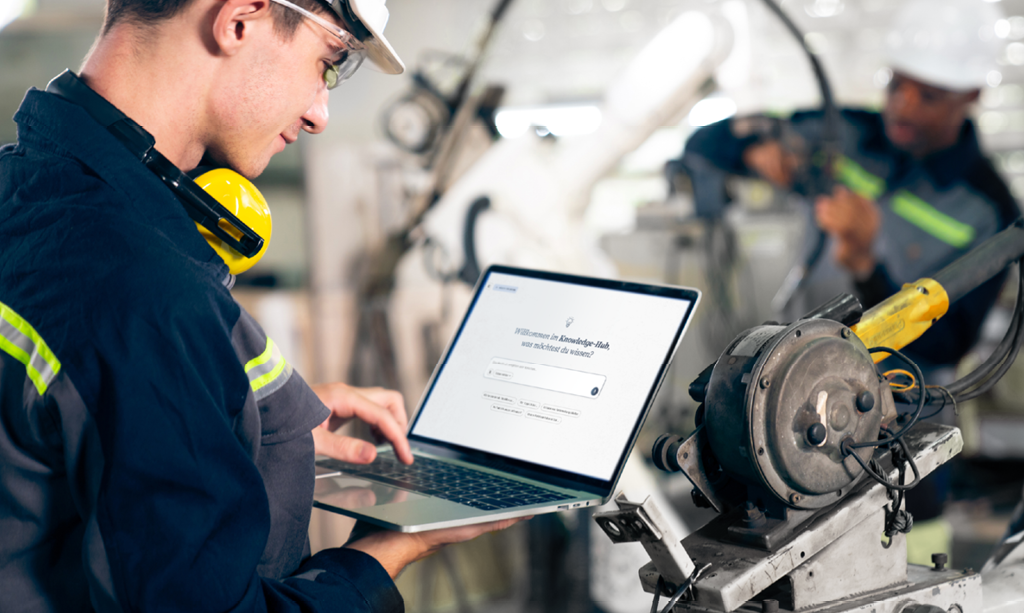
That doesn’t mean no one needs to learn anymore. On the contrary, because fundamentals, context, and understanding remain essential. But when concrete support in day-to-day work is needed, learning can become more immediate and effective. Not learning in advance, but learning when the need arises.
This also changes the role of learning professionals. In the future, the task will be less about producing as many training courses as possible. Instead, the key question will be which learning format offers the greatest value in which situation. Some topics will continue to be best suited for WBT or in-person training. Others can be better supported through performance support, knowledge bases, or AI-powered assistance systems. Learning & Development is thus increasingly evolving from a producer of individual learning offerings to an architect of an effective learning landscape. The goal is to meaningfully connect the various building blocks and deliver learning offerings where they provide the greatest benefit.
The perspective on modern corporate learning described here has served as the foundation for the development of our solutions for many years. These include traditional digital learning formats as well as learning platforms, AI-powered learning assistants, and our AI Authoring Tool knowtion. Not because we want to replace existing learning formats, but because we’re convinced that sustainable learning happens where proven methods and new possibilities work together in a meaningful way. After all, rethinking learning doesn’t mean leaving the past behind. It means combining the best of both worlds.
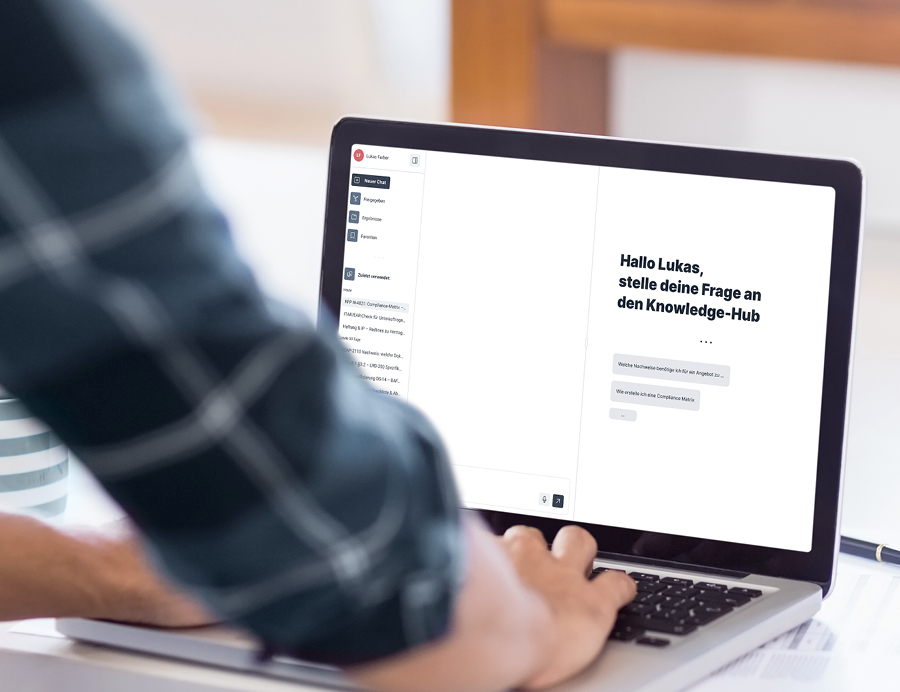
Want to learn how the ideas in this article can be put into practice? Discover our solutions for modern corporate learning and learn about our AI learning assistants and other real-world examples.

Friedl Wynants