Digital onboarding (part 2) -
7 tips for successful onboarding
06-08-25 | 4 minutes reading time
7 tips for successful onboarding
06-08-25 | 4 minutes reading time

Annalena Moritz
Consulting
Digital onboarding requires more time and structure than traditional induction, as spontaneous office interactions have to be replaced by planned appointments. The 7 success factors: allow sufficient time, use modern communication tools, convey content step by step, develop creative digital formats, use suitable software, continuously optimize and integrate personal encounters. 2025 in focus: AI chatbots and adaptive learning platforms automate routine tasks and personalize learning content. The ROI is right - well thought-out digital onboarding reduces fluctuation, saves costs and creates competitive advantages in the battle for talent.
The onboarding process begins with the signing of the contract and ends after about the first six months on the job. The aim is to get new employees up to speed professionally and integrate them into the team. This enables them to deliver added value quickly and reduces the initial fluctuation rate by increasing satisfaction, which leads to considerable cost savings. Successful onboarding forms the basis for long-term and successful collaboration.
But be careful: onboarding cannot simply be transferred one-to-one from analog to digital. In this article, we will show you what is important for a successful onboarding process and give you seven practical tips for a successful digital induction.
Many companies have had tried and tested induction plans for years. However, remote working now requires a rethink: more time should be planned for remote onboarding. In the office, new employees learn a lot on the side and integrate organically into the company. They can look over their colleagues' shoulders and are easily integrated into the team by spending time together on site. In the Home-Office, appointments have to be planned or e-mails written for all the other things that happen on the side. This takes time and a much more precise structure so that the newcomers don't feel lost despite the physical distance. Well thought-out planning and clear communication channels are the key to success here. Even if it has gone a bit out of fashion, you should expressly encourage spontaneous calls, especially at the beginning - this ultimately saves time on both sides. Things can often be clarified quickly in a few minutes, so you shouldn't have to schedule a meeting first.
To make it easy for newcomers to communicate with colleagues, digital communication should be as simple and personal as possible.
In addition to e-mail, instant messengers are indispensable. They enable non-binding and more personal communication, lowering the barrier to contacting colleagues. Emojis and GIFs can be sent, which promotes social integration. Tools such as Slack or Microsoft Teams offer a wide range of options here.
Video conferencing should also be part of everyday life in the Home-Office. A personal relationship is much easier to build when you can see faces, facial expressions and gestures - so: camera on! Skype, Slack or Microsoft Teams enable both instant messaging and video conferencing. These tools also offer the option of screen sharing. This simplifies technical training enormously by allowing employees to show new colleagues live tasks or guide them through presentations.
The ability to record video conferences offers a further advantage: once recorded, content can be made available digitally so that the onboardee can view the content at their convenience. This gives both sides flexibility and saves the employer time and money.
A major advantage of digital onboarding is the ability to provide content asynchronously (time-shifted). However, this can be tempting to provide all the information at once and leave new arrivals to fend for themselves. This flood of information can quickly become overwhelming and leaves little room for questions.
Instead, the content should be taught gradually in a strategically planned sequence. It is helpful to structure the onboarding process like e-learning with modules that build on each other. This allows employees to learn step by step - this is also referred to as a
For example, the newcomers could start with a welcome video with a personal greeting from the management. This is followed by an interactive learning nuggets that playfully introduces the company's strategy and goals. This can be followed by a technical training session, which is divided into short learning units and discussion rounds.
To give new employees a sense of security, it is a good idea to provide a permanent mentor alongside their line manager. This person can provide support with questions and concerns of all kinds, making it easier to get started.

Digital onboarding offers many opportunities to surprise new colleagues with creative solutions and get them excited about their new employer, starting with the welcome, which can also be personalized digitally. Examples of this include playful get-to-know-you sessions via video conference, an internal podcast or a virtual 360° office tour. Virtual coffee or lunch breaks, digital team events such as virtual escape rooms or video conference scribbles are also entertaining alternatives. Company-wide programs such as "Mystery Lunch" or "Coffee Lottery", in which employees are drawn by lot, promote informal exchanges and strengthen the sense of community.
Identification with the company can also be promoted through a welcome package. A mug with the company logo, Home-Office supplies or other small gifts create a personal connection and give new employees a warm welcome.
The digital onboarding content has been created, but how do you get it to your employees? Of course, you can share the content by e-mail, via the company server or the intranet. Special software such as a Learning Management System (LMS) offers an even more versatile option.
With an LMS, you can upload any amount of learning content - whether video, PDF, learning nuggets or podcasts - and make it available to specific target groups. You can define dependencies between the learning modules so that learners complete them in a specific order. In addition, an LMS offers the advantage that the learning progress of learners can be evaluated. This means you always know where each learner stands.
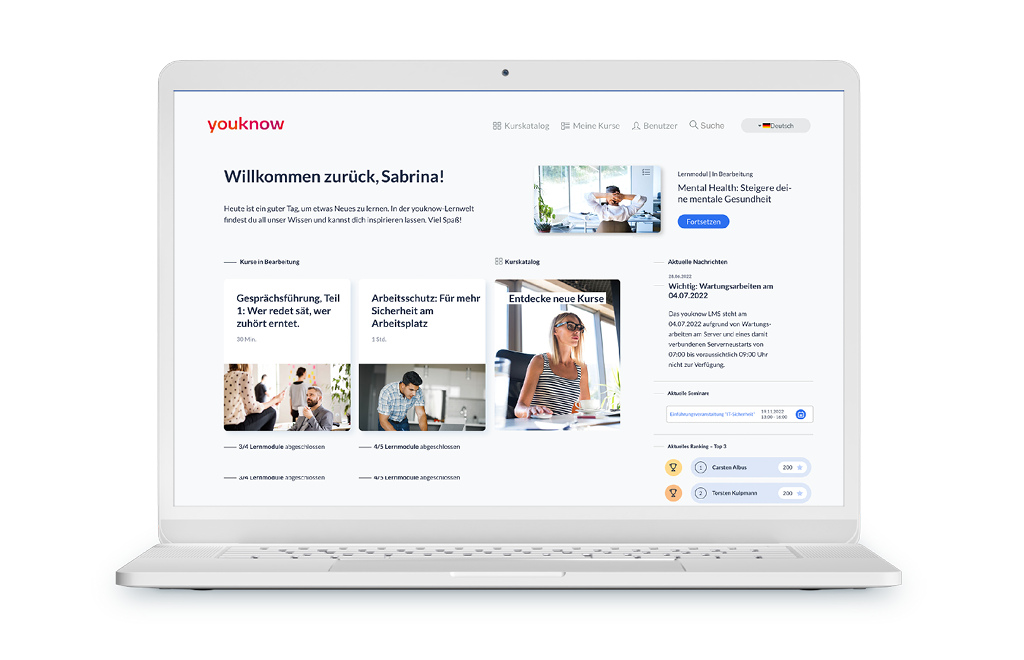
There are also special software solutions that automate the entire onboarding process where new employees can find all information and learning content in one place. Employers receive support in creating checklists and roadmaps. These solutions are particularly helpful in making the onboarding process efficient and structured. The most suitable solution depends on the size of the company and individual requirements.
Artificial intelligence is also revolutionizing onboarding. Chatbots can answer questions 24/7 and guide new employees through the process. AI-based personalization automatically adapts learning content to needs and learning progress.
Adaptive learning platforms analyze learning behavior and suggest appropriate next steps. Automated reminders and follow-ups ensure that nothing is forgotten. AI Authoring Tools such as knowtion also allow you to create high-quality onboarding content quickly and efficiently, saving time and resources.
This tip refers to all aspects and previous tips, as all content, automation and creativity lose their value if they are not aligned with the needs of the company and the employees. The onboarding process should not only be pleasant, instructive and transparent for the new colleagues, but also meet the company's requirements in terms of cost, time expenditure, learning effect and team integration.
You should continuously develop new content and revise existing content and processes based on feedback from all those involved. A standardized feedback form is particularly helpful here. It enables comparable evaluations and objective optimization of the onboarding process.
By regularly adapting and improving the onboarding process, you ensure that both the new employees and the company benefit to the maximum. The former feel well looked after and integrated, while the company increases the efficiency and effectiveness of the process.
There are many ways to make digital onboarding not only professionally successful, but also to establish a personal level despite physical distance. Nevertheless, personal contact cannot be replaced 100%. Depending on the living and office situation of everyone involved, it is therefore a good addition to get to know each other in person when the opportunity arises.
A day together in the office, a meeting after work or a team event offer the perfect opportunity for a personal exchange. These meetings are not only a welcome change from screen-based work, but also strengthen the sense of community and the personal bond within the team.
As you can see: There are many ways to create a personal level, even digitally. However, for optimal onboarding and retention, it is advantageous to supplement digital onboarding with offline aspects and create a so-called blended onboarding experience. This allows you to combine the best of both worlds and create a strong basis for long-term and successful collaboration. The effort and costs involved in developing digital onboarding may seem daunting at first. However, initial investments are by no means money wasted. A successful onboarding process leads to lower running costs and a lower initial fluctuation of new employees.
The economic importance of onboarding should not be underestimated. A well-thought-out onboarding process is an important building block for retaining human resources in the long term. By combining digital and personal elements, you can create a comprehensive and effective onboarding experience that promotes both the professional and social integration of new employees.
You have the goals, we have the solutions – together we will find the best one for you.