User-generated content:
Produce learning content in-house
29-10-24 | 5 minutes reading time
Produce learning content in-house
29-10-24 | 5 minutes reading time

Carsten Albus
Software development
The demand for digital learning content is increasing, which presents many companies with the challenge of providing the required amount of content. In principle, companies have two options for producing learning content: The creation of content by external service providers or in-house production (or a mix thereof).
In-house production requires human resources, know-how and tools for content creation; external production is cost-intensive and also requires in-house resources for briefing, coordination and feedback loops with the service providers. It is therefore important to weigh up what is the most suitable approach for the company - it often ends up being a mix of internally and externally produced learning content. Our make-or-buy decision tree. provides initial assistance in deciding whether to produce content internally or externally and whether standard or customized content is best
More and more companies are currently relying on in-house production of learning content: 70% already create learning content themselves, 26% plan to do so in the near future. The main reasons for this are that companies can control the development of digital learning content themselves and align it specifically with their training strategy. Last but not least, they also save costs and time for external service providers. (Source: eLearning Journal BENCHMARKING study, sub-study on education management and digital didactics. 2021)
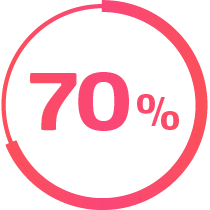
rely on in-house production
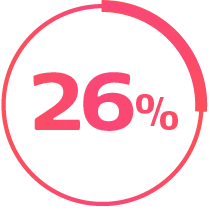
are considering it
Allerdings braucht die In-house-Produktion geeignete Ressourcen. Häufig fehlen sowohl personelle Kapazitäten als auch Erfahrung in Didaktik und Content-Erstellung. User-generated Content nutzt vor allem das fachliche Spezialwissen aus den Abteilungen: Mitarbeitende bringen ihre thematische Expertise ein und bereiten sie für Kolleginnen und Kollegen auf. Damit daraus verständliche und didaktisch sinnvolle Lerninhalte entstehen, benötigen sie jedoch geeignete Tools, klare Leitlinien und Unterstützung im Erstellungsprozess.
In the future, specialist departments in particular will be increasingly required to create learning content themselves or to participate in it. This has a number of advantages: on the one hand, training managers can be relieved, while at the same time companies can meet the increasing demand for content.
It also offers the opportunity to produce training courses more efficiently: If the subject matter experts create their own learning content, the amount of coordination required between the specialist departments and L&D is reduced.
Even companies that do not have a traditional training department benefit from the user-generated content approach. This is because it makes it possible to produce a lot of learning content in-house - even without a department or person responsible for it. This saves the often high costs of external service providers.
Subject matter experts who share their own knowledge meet learners at eye level. As the learning content comes from direct colleagues, this increases the perceived relevance of the content and at the same time the acceptance of the learners.
Another advantage of user-generated content is that the knowledge comes directly from first-hand sources. It is not put through the wringer before being disseminated, which can result in important information being lost. Specialist experts are important content suppliers in the company, but there is always a risk that knowledge will leave the company (e.g. in the event of fluctuation or impending retirement). However, if the specialist departments are given tools with which they can process their knowledge, then this know-how remains in the company. New employees can then simply prepare and share their content using the existing tools.
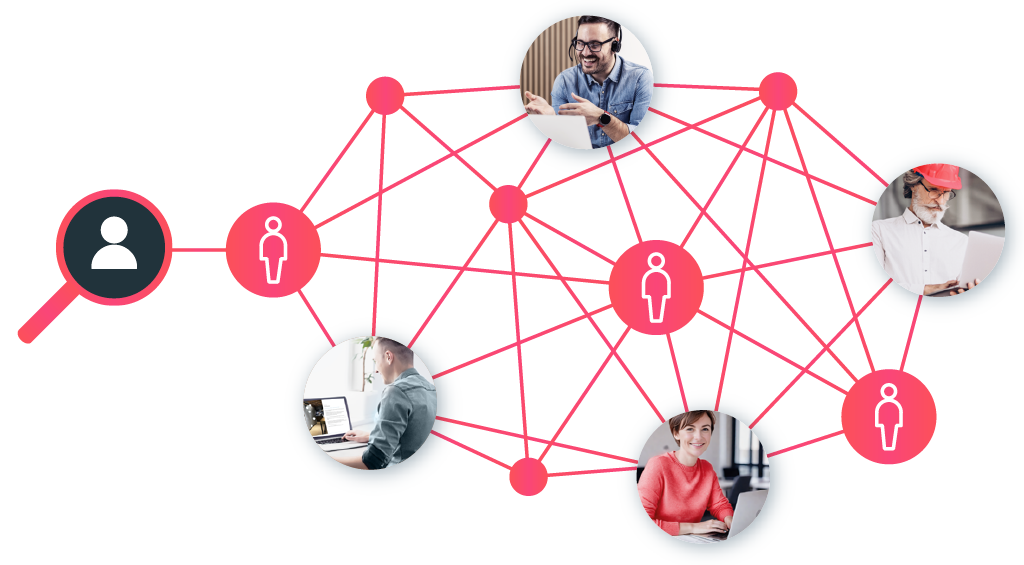
Through user-generated content, certain subject matter experts can be identified within the company. Some employees may not even have been aware that their direct colleague is particularly knowledgeable about a topic. In this way, certain expertise can be uncovered and employees can network with each other and learn from each other.
You would think that experts are particularly good at explaining their topics, but often the exact opposite is the case. This is because they are usually trapped in the "curse of knowledge ": It is very difficult for a well-informed person to put themselves in the shoes of those who do not have the same level of knowledge. As a result, experts often explain at a level that is incomprehensible to laypeople - and don't even realize it.
With the right methods, this "curse of knowledge" can be counteracted. In general, however, employees from specialist departments usually have little prior knowledge of didactics, tools and the concrete implementation of learning content. However, this know-how is essential in order to create successful learning content. The eLearning BENCHMARKING Study 2021 has shown that the acceptance of the target group is necessary in order to successfully convey learning content. Three aspects in particular are important here: user-friendly learning content, practical examples and good didactic preparation.
In practice, this means that a certain understanding of didactics and know-how for creating learning content is necessary to produce effective training and ensure sustainable learning success.

69% usability

59% practical examples / realistic scenarios

47% didactic concept
Companies are therefore faced with the challenge of empowering more employees to create didactically effective learning content. Workshops and training courses can play a role here. However, these are also time-consuming and costly and must be coordinated with all employees to be trained.
A second challenge: tools are needed to enable a wide range of employees to create this learning content, such as an authoring tool. But even if both points are met, this is no guarantee of high-quality didactic content. This is because subject matter experts who rarely create content start from scratch every time, and new employees also have to go through a learning curve before they are able to produce didactically valuable content.
Damit User-generated Content nicht bei einzelnen engagierten Autorinnen und Autoren hängen bleibt, braucht es einen einfachen und verlässlichen Erstellungsprozess. Unser Autorentool knowtion unterstützt Mitarbeitende dabei, ihr Fachwissen ohne umfangreiche Vorkenntnisse in klar strukturierte, didaktisch sinnvolle Lerninhalte zu überführen. Das entlastet L&D, senkt die Einstiegshürde für die Fachbereiche und schafft die Grundlage dafür, User-generated Content im Unternehmen systematisch auszubauen.
Die passende technische Lösung ist jedoch nur ein Teil der Aufgabe. Ebenso wichtig sind klare Zuständigkeiten, Zeit für die Erstellung, Akzeptanz in den Fachbereichen und eine funktionierende Qualitätssicherung.
Welche Hürden Unternehmen bei der Einführung typischerweise begegnen und wie sie sich überwinden lassen, zeigen wir in unserem Blog-Beitrag:
User-generated Content erfolgreich einführen: 5 Herausforderungen und ihre Lösungen

Carsten Albus
So what would it be like if a tool could overcome these challenges? If every person in the company could create high-quality didactic learning content - without any prior knowledge?
With knowtion - the smart AI Authoring Tool that thinks for you, you can automate the creation process and save valuable time. Learning objectives, story ideas, interactions and complete training courses - the didactic AI does it all for you. This takes user-generated content to the next level.

Ulrike Meissner
Senior Account Manager
You have the goals, we have the solutions – together we will find the best one for you.